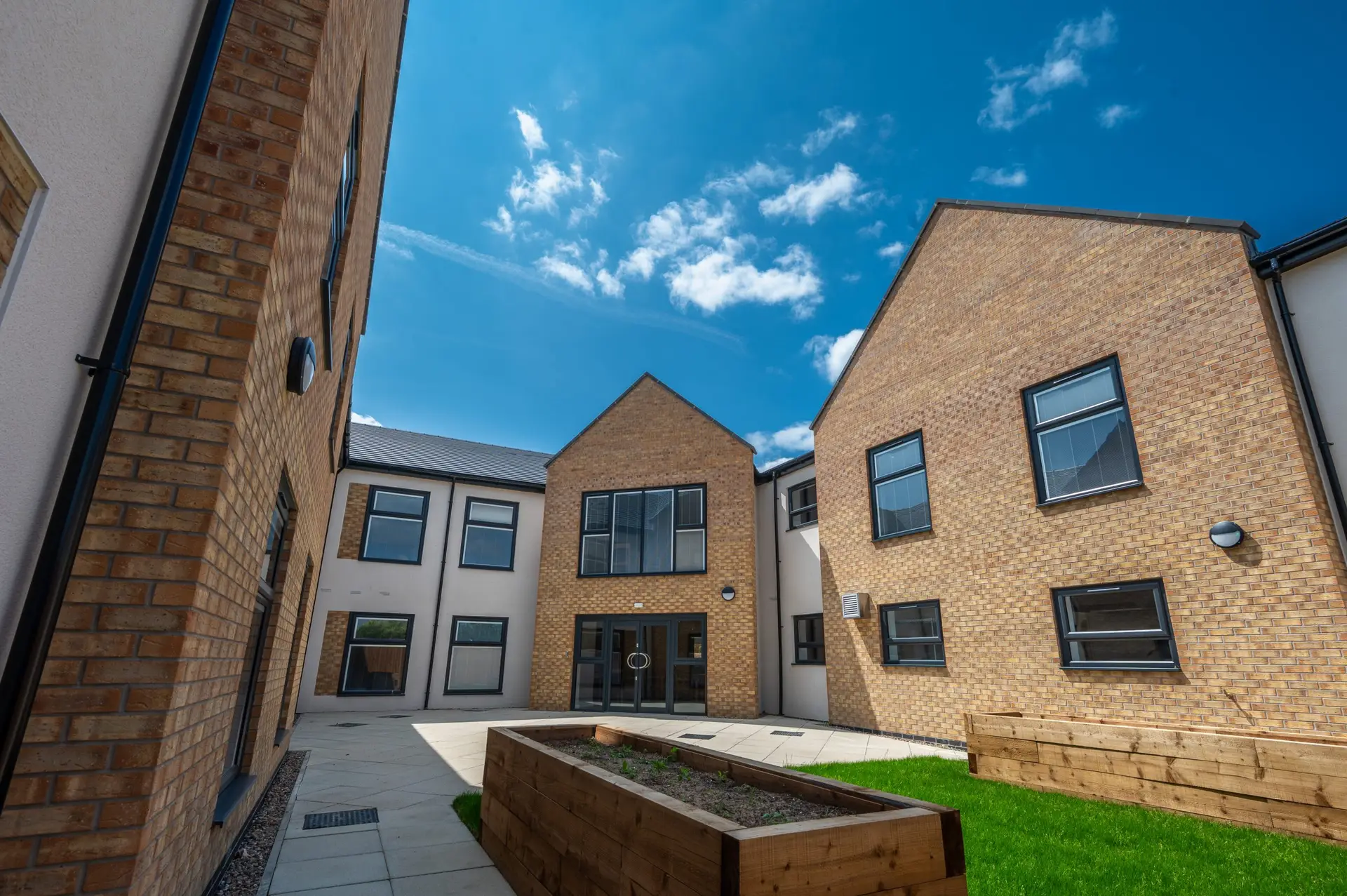
Calm, Personalisable Spaces That Support Recovery
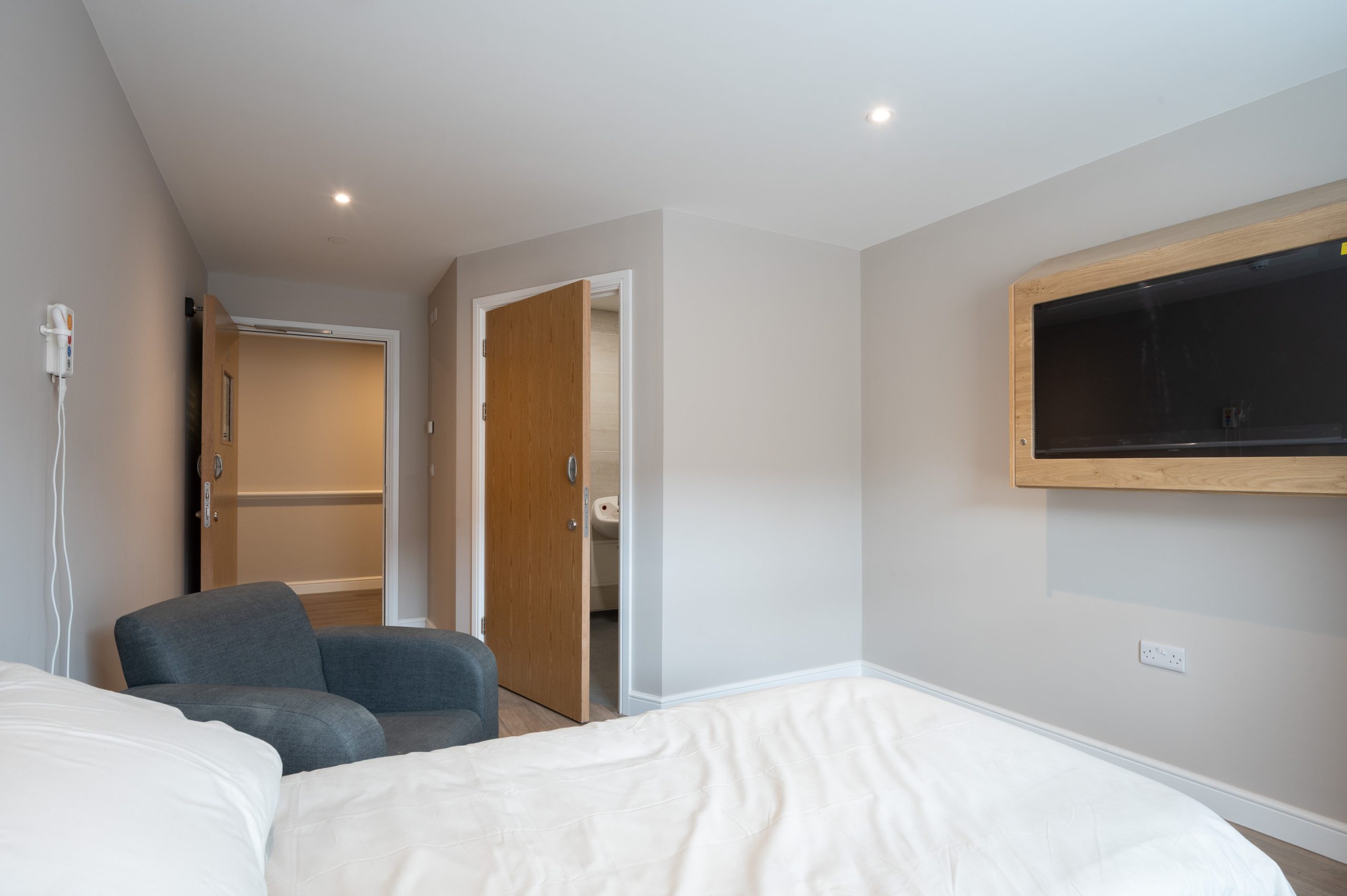
Calm by design — a low-arousal space that waits to become the person’s own.
Across this series we have looked at how individual fittings at Bancroft Care Centre build safety into everyday objects, and how a whole bedroom is designed as one coherent, safe space. This final view — looking back across the room from the bed toward the en-suite — shows something just as important as safety: the way the space is designed to support recovery itself.
Recovery is not only about what is added to a room. It is also about what is deliberately left out.
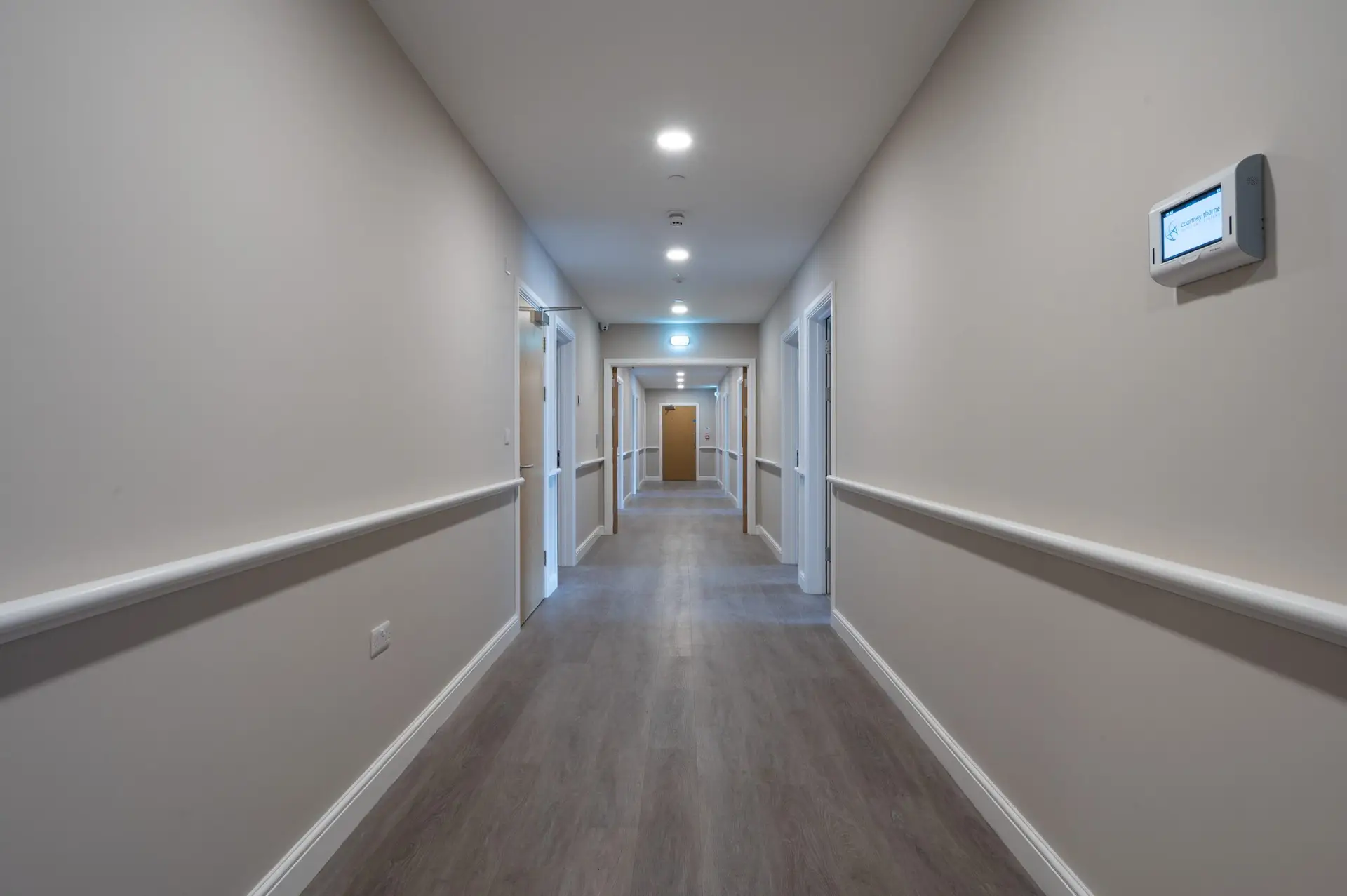
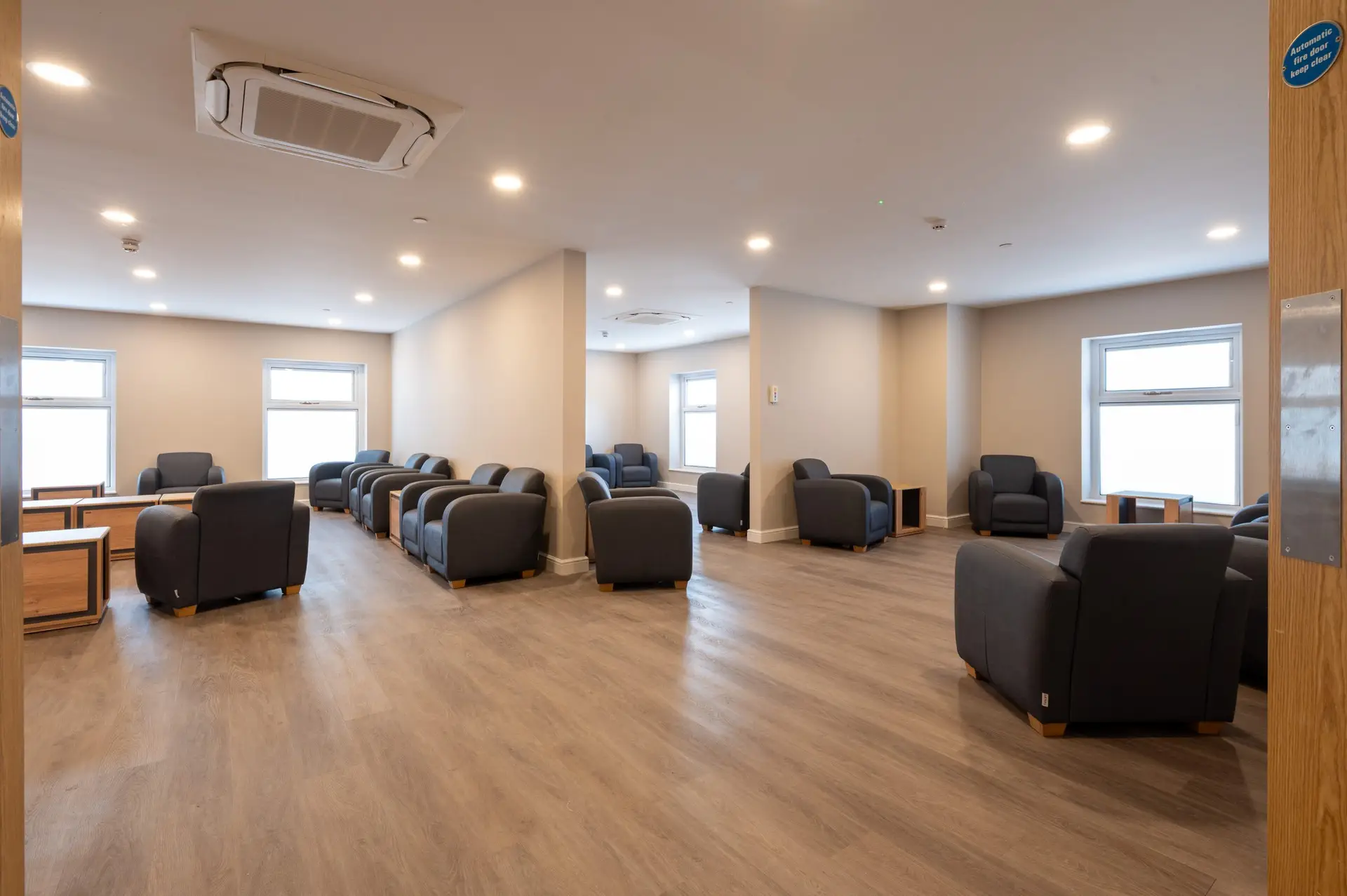
The first thing to notice about this space is how little it asks of you. The walls are soft and neutral, the lighting is warm and recessed, the floor is clear, and the lines are clean and uninterrupted. There is no visual clutter, no harsh colour, no busy pattern competing for attention. This is intentional.
Many of the people we support are recovering from acute episodes of mental illness, living with enduring conditions, or managing distress that can be heightened by an overstimulating environment. A calm, low-arousal space helps to settle the nervous system rather than provoke it — giving someone the quiet they need to rest, regulate, and begin to feel steady again.
Low stimulation does not mean bare or institutional. It means a room that is gentle on the senses, where nothing is jarring and everything has its place. That calm is the starting point for recovery.
A neutral room is not an empty promise — it is an open invitation. The space is deliberately understated so that it can become the person’s own. Photographs, belongings, colours, comforts and the small markers of identity that make a room theirs can all be added over time, at the pace that feels right. The environment does not impose a character; it waits to receive one.
This matters because personalising a space is itself part of getting better. Choosing how a room looks, bringing in familiar things, and shaping the place you sleep and spend your quietest hours restores a sense of ownership and control that illness and hospital admission often strip away. We provide the calm, considered backdrop; the person makes it home.
A defining feature of this room is the en-suite bathroom, accessible directly and within sight from the bed. This is a significant part of supporting dignity and independence. Being able to reach a private bathroom in your own room — without navigating a corridor or waiting for assistance — protects privacy, reduces dependence, and supports the ordinary autonomy of daily life. For people who have spent time in inpatient environments, that degree of self-sufficiency is both practical and quietly restorative.
The bathroom carries the same design thinking as the bedroom: the anti-ligature basin described earlier in this series, smooth surfaces, concealed fittings, and safety engineered discreetly into a clean, domestic-style space.
All of the safety we have written about across this series is present here — the anti-ligature door with its recessed handle and lock, the sealed television enclosure, the accessible nurse call point, the considered lighting and fittings. But notice how little of it announces itself.
The safety is real and continuous, yet it sits quietly in the background, allowing the room to feel like a calm bedroom rather than a clinical one. People are kept safe without being made to feel watched or restricted, and every space remains subject to individual risk assessment matched to the needs of the person using it.
Brought together, this is a space that does two things at once. It protects, through safety woven invisibly into every fitting. And it heals, through calm that soothes and a blank canvas that gives back ownership and identity.
In a service providing hospital-equivalent care within a homely setting, the environment itself becomes part of the care model — giving people room to breathe, room to recover, and room to become themselves again.
That is the standard we hold across every room and every detail of life at Bancroft.